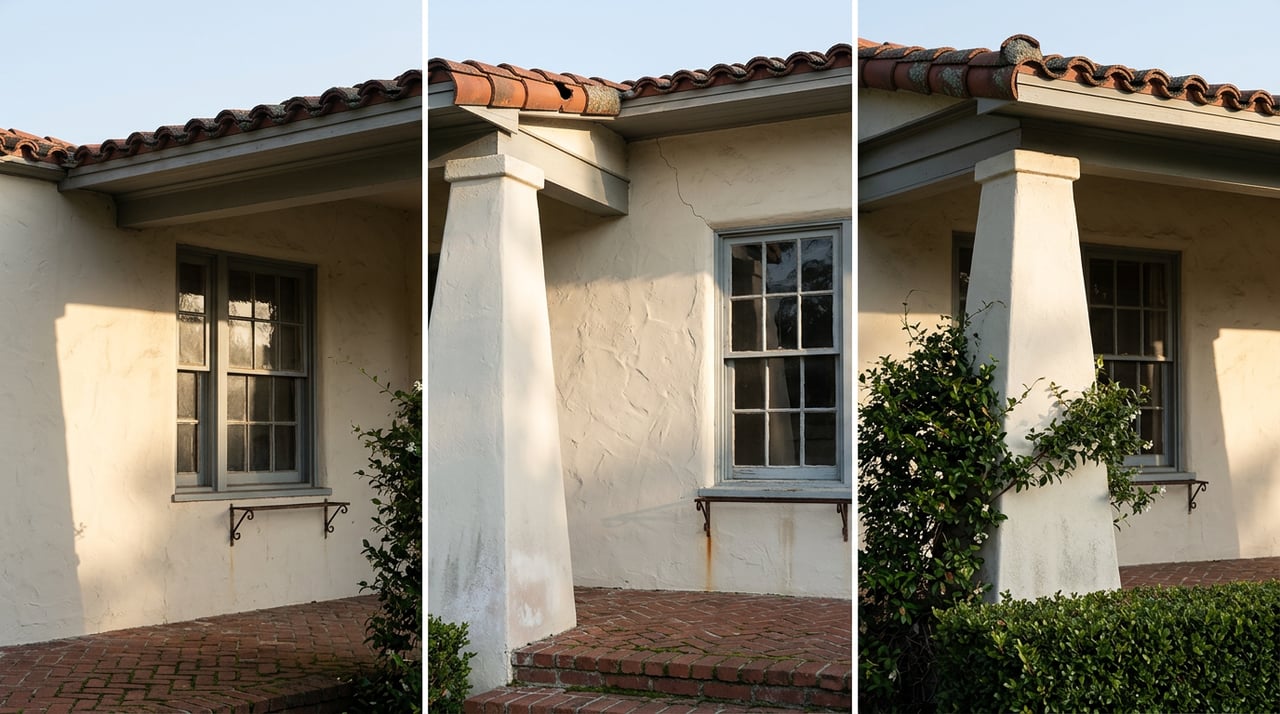
Walk down 16th Avenue NE toward the water on a Saturday morning and you'll pass a run of 1920s bungalows that all look, from the sidewalk, like they live under the same set of rules. They don't. One owner can swap out a failing window for a modern vinyl replacement this week with nothing but a standard building permit. Her neighbor two blocks over, inside the curved streets of Granada Terrace, needs a Certificate of Appropriateness from the city before that same window comes out, and vinyl probably won't be the material the city approves.
That gap surprises almost everyone who buys in Historic Old Northeast, including people who did their homework. The neighborhood carries the word "historic" so consistently in listings and conversation that most buyers assume the entire district operates under one uniform set of renovation rules. It doesn't. Understanding which rulebook applies to a specific address, before you write an offer or price out a renovation, is the single most useful thing I can tell a buyer or seller in this neighborhood.
Two Different Kinds of "Historic"
Old Northeast is officially the North Shore Historic District, added to the National Register of Historic Places in 2003. That listing covers most of the neighborhood and it means exactly what it sounds like: an honor. For residential properties, National Register status does not require design review of any kind. You can replace a roof, add a room, or repaint the exterior without asking the city's permission because you carry that designation, though you'll still need standard building permits like anyone else in Florida.
Local Historic District designation is a different animal entirely. It's a city-level regulatory status, and where it applies, exterior changes visible from the street go through a Certificate of Appropriateness (COA) review by the City of St. Petersburg's Community Planning and Preservation Commission before you touch them. The goal isn't to judge whether your addition looks nice. It's to decide whether the change is compatible with the historic character the district was created to protect.
Most of Old Northeast sits under the honorary designation only. The regulatory version applies to specific, named pockets inside the larger neighborhood.
Where the COA Requirement Actually Lives
Granada Terrace is the big one. Platted in February 1924 by developer C. Perry Snell along the west side of Coffee Pot Bayou, it was built with curved streets, circular plazas, and a strict Mediterranean Revival aesthetic from day one. The city made that protection official in 1988, designating Granada Terrace a Local Historic District. If your address falls inside its boundaries, the COA process applies to your exterior work, full stop.
Beyond Granada Terrace, the Historic Old Northeast Neighborhood Association's own preservation materials note that several smaller, one-block pockets within the broader neighborhood picked up local historic district status later, layered in over the years as individual blocks applied and were approved. And scattered through the neighborhood are roughly ten individually designated local landmarks, protected one property at a time rather than by district. The Vinoy Park Hotel is the best known. Others include the Jones-Laughner Residence on Beach Drive NE, the Ridgely Residence, the Robert West House (known locally as the Pineapple House), the Boyce Guest House, and the Thomas Whitted House. If you're buying one of these specific properties, the regulatory rules follow the building regardless of what's happening on the rest of the block.
This is also not a fixed map you can check once and forget. The city has continued adding to its inventory of protected properties elsewhere in St. Petersburg in recent years, including a citizen-initiated local historic district for Mirror Lake and a new individual landmark designation for the historic Trinity Lutheran Church downtown. The pattern holds in Old Northeast too: designation here has arrived in pieces, block by block and building by building, over decades. A verification you did when you first considered the neighborhood might not reflect the current map.
Here's the honorary-versus-regulatory distinction laid out side by side:
| National Register (honorary) | Local Historic District (regulatory) | |
|---|---|---|
| Design review required | No | Yes, through a Certificate of Appropriateness |
| Who administers it | National Park Service listing | City of St. Petersburg preservation staff and the Community Planning and Preservation Commission |
| Interior work | Not reviewed | Not reviewed |
| Exterior work visible from the street | No historic-specific permit | COA required for windows, roofing, siding, porches, additions |
| Demolition of a contributing structure | Not restricted by the listing itself | Requires COA review, intended to discourage demolition |
| Tax incentive | Federal rehab credit, income-producing properties only | 10-year ad valorem tax freeze available for qualifying residential rehab |
| Where in Old Northeast | Most of the neighborhood, as the North Shore Historic District | Granada Terrace, several one-block pockets, roughly ten individual landmarks |
What a COA Actually Restricts, and What It Ignores
Where the regulatory designation applies, the review focuses on what's visible from the street. Windows, roofing, additions, porch alterations, and demolition all typically require a COA if you're inside a locally designated district or your property is an individual landmark. Interior work is left alone almost entirely. You can gut a kitchen, replace plumbing, or reconfigure a bathroom without triggering any historic review, regardless of which side of the designation line your house sits on.
Materials matter more than people expect once you're in COA territory. Like-for-like window replacement, matching the original material and profile, generally doesn't require review at all. Changing the material or style is where it gets stricter. Vinyl windows are generally not considered appropriate for contributing structures in a designated district. Wood or aluminum-clad wood are the options that typically get approved.
The Timeline You Should Actually Budget
If your planned work stays within staff-level review, a straightforward COA application, think like-for-like replacements or a modest porch repair, typically takes 30 to 60 days from submission to approval. Anything that needs to go in front of the Community Planning and Preservation Commission for a public hearing, like a second-story addition or a material substitution, adds real time on top of that, often pushing the total process closer to two to four months before a permit can even be pulled.
That timeline is worth internalizing before you get attached to a closing date or a contractor's start window. Since the city's historic preservation program began in 1987, 97 percent of Certificate of Appropriateness applications have been approved. The city isn't trying to block your project. What eats the calendar is the review process itself, not the likelihood of a no.
The Tax Incentive Most Owners Don't Find Until After They've Already Budgeted
There's a real financial upside tied to this same regulatory framework, and it's the part almost nobody mentions when they're describing the restrictions. Florida offers an ad valorem property tax exemption for qualifying historic rehabilitation, and in St. Petersburg it can freeze the assessed-value increase from a qualifying restoration for up to ten years. If you're buying a fixer in Granada Terrace or one of the individually designated landmarks with plans for a substantial, code-compliant rehab, that freeze is worth asking about before you finalize your renovation budget, not after the invoices are already paid.
How to Check Before You Write the Offer
Don't rely on a listing description or a neighborhood reputation to answer this for you. A few concrete steps before you get too far into a purchase or a renovation plan:
- Confirm the property's designation status directly with the City of St. Petersburg's Historic Preservation staff. Don't assume based on the block or the era of the house.
- If it's within a designated district, ask whether the structure is classified as contributing or noncontributing. That status shapes how strictly proposed changes get evaluated.
- Before finalizing renovation plans, ask the city whether your specific scope of work requires a COA, and whether it's likely to clear at the staff level or require a hearing.
- If you're planning a substantial rehab, ask about eligibility for the ad valorem tax freeze early, since qualifying often depends on how the work is documented and executed.
- If you're buying near a district boundary, don't assume the rules stop at the edge you remember from a prior visit or an old blog post. Verify current boundaries, since the city has added districts and landmarks elsewhere in recent years.
A Few Questions I Get Often
Does National Register listing by itself ever trigger a COA? No. For residential properties, National Register designation is honorary. It doesn't require design or demolition review on its own. Only local designation, whether district-wide or as an individual landmark, brings the Certificate of Appropriateness process into play.
Will an interior renovation ever need historic review? Generally no, regardless of designation status. The COA process is built around what's visible from the street. Interior changes are treated the same as they would be anywhere else in the city, subject to standard permitting.
What happens if a previous owner did exterior work without a COA in a designated area? That's worth surfacing during due diligence rather than discovering after closing. Ask for permit and COA history on any designated property, and treat gaps in that documentation as something to resolve or negotiate around before you finalize a purchase.
If you're weighing a specific address in Old Northeast, whether it's a bungalow on the interior grid or something inside Granada Terrace, I'd rather walk the designation question with you before you write an offer than have your contractor surprise you with it three months in. That's the kind of groundwork Drift Home Realty does on every Old Northeast transaction. Schedule a free consultation and let's figure out which rulebook actually applies to the house you're considering.
